Series: The Experience of Natural Imagery
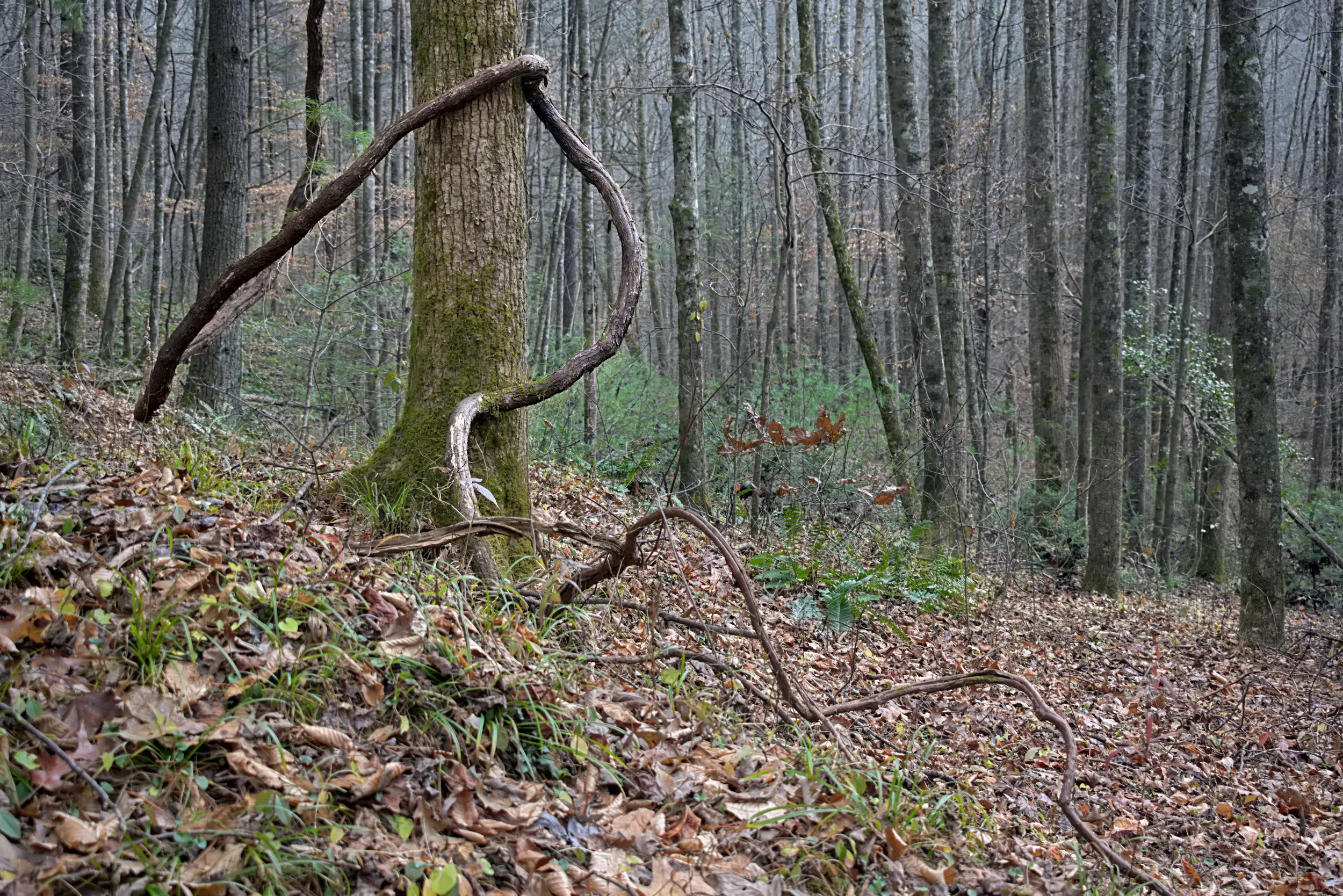
Spending time indoors, we are surrounded by surfaces, objects, light, color, and images that gradually become familiar. We may not consciously study them, but they remain within our field of view and become part of the atmosphere of a room.
Some interiors include direct contact with nature through windows, daylight, plants, or access to outdoor space. Others contain indirect references through natural materials, organic forms, or images of landscapes.
Those indirect references raise several questions for me. Does a photograph of nature continue to register after it becomes familiar? Does the subject matter more than its color, scale, or placement? Are some images easier to live with than others? How much of our response comes from the image itself, and how much comes from memory, preference, or the character of the surrounding room?
In this series, I will use intimate landscape photography as one way of exploring those questions.
A Question, Not a Claim
Encountering nature outdoors is different from encountering a reference to it within a room. A framed photograph is not a forest, just as a wood surface is not a tree and a view through a window is not the same as standing within the landscape.
Those differences are why one experience is not a substitute for the other.
The room matters. The person matters. Memory, preference, culture, scale, placement, and familiarity may all shape the viewer’s experience.
I do not want to assume that natural imagery produces a particular emotional result. I am more interested in a narrower question:
What happens when images of the natural world become part of the spaces where we live, work, wait, and rest?
Why the Kind of Nature Image May Matter
Nature imagery is often treated as one broad category. However, an open shoreline or a distant mountain do not ask the same things of the eye as does a dense woodland or a close view of moss and roots.
One offers distance. Another offers enclosure and intimacy. One may be understood almost immediately. Another may reveal its structure more gradually.
Intimate landscapes tend to emphasize closeness rather than distance. They bring the viewer near surfaces, forms, and small relationships within a place. The image may contain overlapping shapes, muted transitions, irregular patterns, and details that do not become apparent all at once.
Their contribution to a room may be modest. They can introduce natural form, subdued color, fine detail, and a sense of proximity to the subject. Over time, those qualities may become part of the room rather than remain a single visual event.
For one person, an intimate landscape may feel restful. For another, it may feel absorbing, familiar, dense, or uncomfortable. An open horizon may offer relief to one viewer and emptiness to another.
The more interesting question, I think, is not whether natural imagery works in a particular way, but how our experience of it changes with the image, the viewer, and the room.
The series begins with a simpler question: What do we notice when we look at nature?
Click here for the specific print details of the art shown in this writing.
