The Invisible Frame - How Lighting Changes a Print
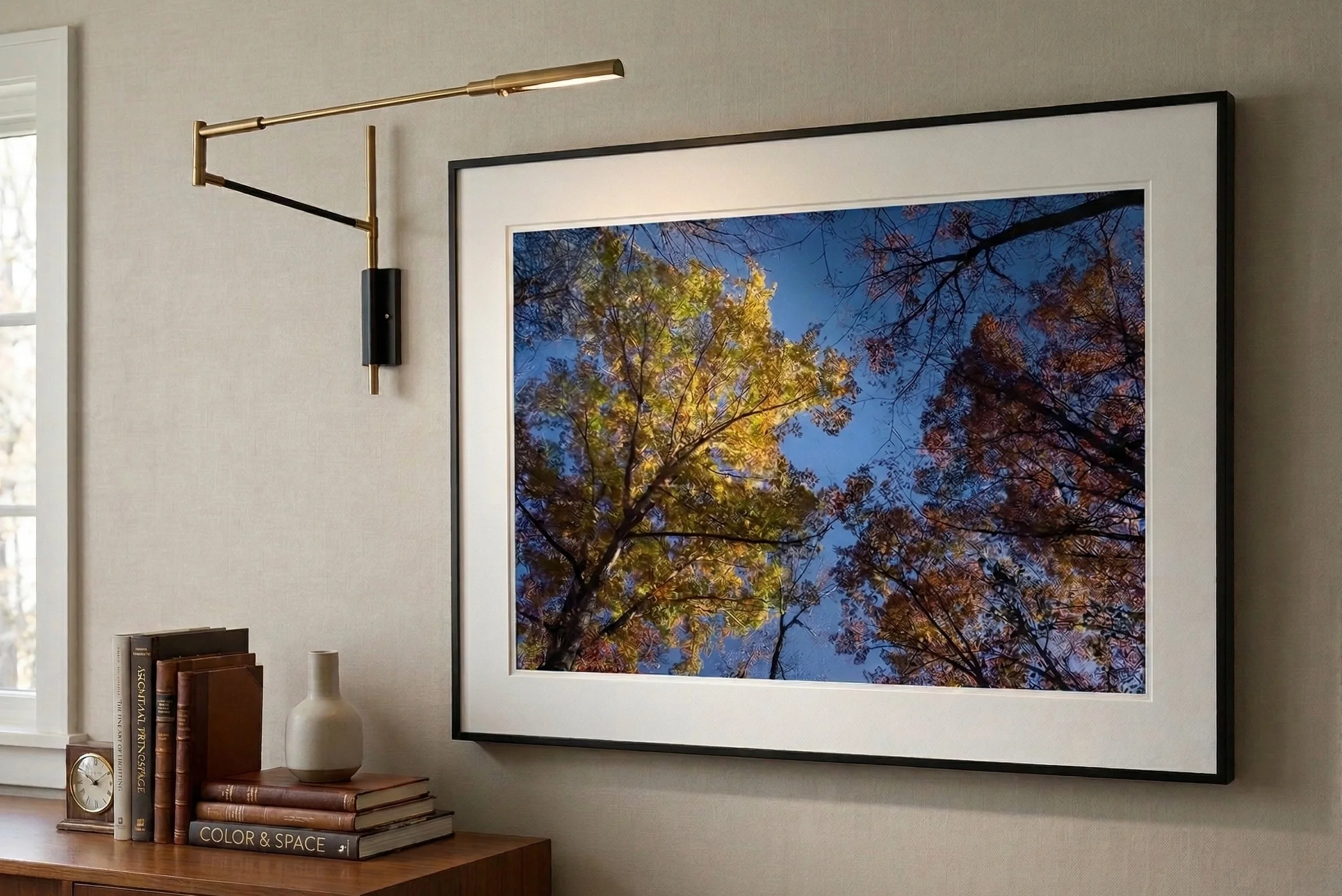
Sometimes you hang a print on the wall and it looks exactly as you remembered it. Other times, the colors feel a bit off, or the paper looks flat. It’s easy to blame the print, but often, it’s the light in the room doing the work. Light is the final layer of any piece of art; it’s the invisible frame that either brings a scene to life or dims its spirit.
The Color of the Room
Light bulbs aren't all the same. Some have a warm, yellow glow like a candle, while others feel crisp and blue like an office. If the light in a room is too yellow, the cool greens of a forest or the deep blues of a mountain morning can start to look muddy. A light that feels like a clear, natural afternoon usually lets the true colors of the paper breathe.
Shadows and Texture
Archival paper isn't just a flat surface, it has a physical "tooth" or texture to it. When light hits a print from a slight side angle, it catches those tiny peaks and valleys, giving the image depth. If the light is too flat or coming from directly in front, that texture disappears, and the image can lose its character.
Dealing with Reflections
We’ve all had the experience of trying to look at a beautiful photograph only to see the reflection of a nearby window instead. The angle of the light matters as much as the brightness. Placing a print where light washes over it from the side, rather than bouncing directly off the glass into your eyes, makes the frame feel almost invisible.
Protecting the View
While we need light to see the art, too much of it can be a slow eraser. Harsh, direct sunlight is hard on paper and ink. Choosing a spot with soft, indirect light keeps the whites bright and the dark tones deep for years, rather than letting the sun wash them out.
———
The next time you walk past a favorite print, take a second to notice how it changes as the day goes by. The way a morning sunbeam or a evening lamp hits the paper can make you see a detail you never noticed before. Lighting is less about visibility and more about making sure the art feels at home in your space.
Click here for the specific print details of the art shown in this writing.
