A Photograph Is Not a Forest
Series: The Experience of Natural Imagery
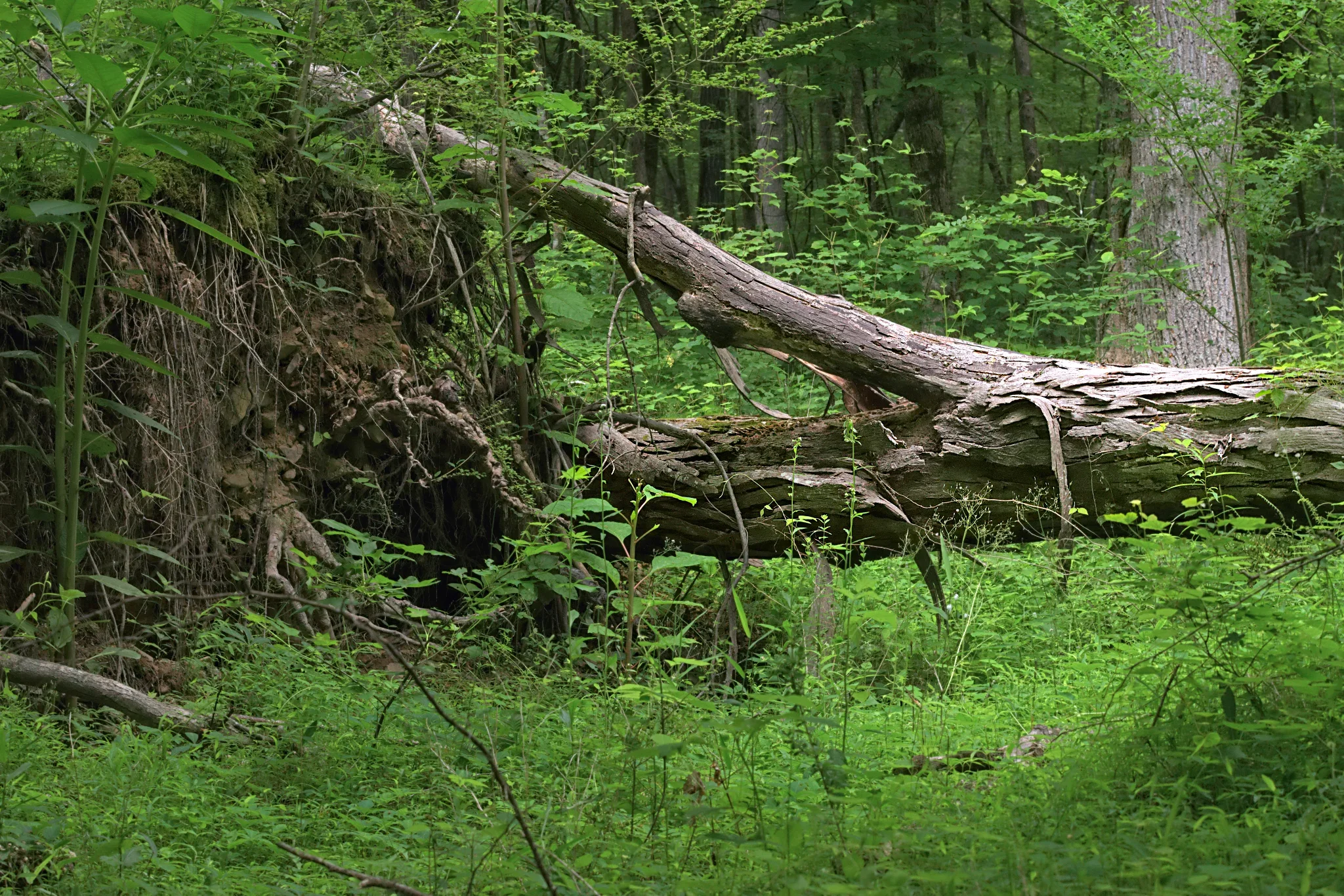
A forest is difficult to hold in the mind all at once.
There is the ground immediately in front of us, uneven with roots and leaves. There are trunks at different distances, some sharp and some partly hidden. Water moves somewhere nearby. Moss softens the edge of a stone. A small change in light alters the color of the bark or brings out a pattern in the creek bed.
Nothing remains fixed for long. We move, the light shifts, and different parts of the forest come forward.
A photograph changes this experience. It selects one view and holds it still.
That difference is important.
The limits of a frame
When making a photograph, the edges of the frame become part of the subject.
A root may continue beyond one side. A creek may enter the image without showing where it begins. A dark area may conceal as much as it reveals. The photograph does not explain the entire setting. It gives us a limited section of it.
This limitation can make ordinary relationships easier to see.
A close view of moss on stone may show the uneven boundary between the two surfaces. Water may appear as a narrow, pale passage between darker forms. A group of roots may become a pattern of lines, gaps, and shadows. These details were present in the forest, but the frame asks us to consider them together.
What lies outside the image remains unknown. That absence is part of the photograph.
The forest is not arranged for us
A forest does not organize itself according to the needs of a camera. There are branches in the way, bright patches that compete with darker areas, and forms that overlap without making themselves clear. A scene that feels coherent while walking through it may look disorganized when reduced to a rectangle.
This is one reason photographing natural subjects involves more than finding something attractive. The photographer has to notice how the elements relate within a particular view.
Moving a few steps can change the image completely. A tree trunk may separate from the background. A reflection may line up with a stone. A patch of sky may disappear. The relationships remain in the same place, but the photograph gives them a different order.
The camera does not simply record what was seen. It records a position within the scene.
A change in scale
Photography can also alter our sense of scale.
A small section of creek bank may fill the entire print. A piece of bark can become a broad field of lines and texture. Moss that was easy to overlook while walking can become the most noticeable form in the image.
This does not make the subject larger in its original setting. It changes the conditions under which we see it.
In the forest, the moss belongs to a wider arrangement of plants, soil, water, and weather. In the photograph, it becomes easier to study its edges, color, and surface. We may notice where it thickens, where it gives way to stone, or how its irregular shape contrasts with a straighter root.
The image isolates these details without removing their connection to the larger place.
What cannot be photographed
A photograph cannot carry the full physical experience of being outdoors.
It cannot reproduce the cool air under the trees, the sound of water, or the sensation of stepping over wet ground. It cannot show the way a forest changes as we move through it. It cannot include every direction at once.
These absences are not problems to solve. They are part of what distinguishes an image from the place it describes.
The photograph offers sight without the other conditions of the forest. Because of this, it asks us to meet the image on its own terms. We are not standing beside the creek. We are looking at a carefully limited arrangement of tones, surfaces, and forms that came from the creek’s edge.
The image may bring the place to mind, but it does not pretend to bring the entire place indoors.
A record of looking
Every photograph contains a record of what someone considered worth isolating.
This does not mean the photographer found a subject that no one else could have seen. The roots, stones, and water were already there. The decision was to stop, look from a particular position, and allow one relationship to occupy the frame.
That decision becomes part of the finished print.
A photograph of a forest interior may show no broad view and offer little information about location. It may instead describe the way a surface meets another surface, or how subdued light moves across a group of forms. The image is regional in origin, but its subject may be more specific than a place name. It may be a pattern found along a creek, a particular kind of growth, or the quiet disorder of a woodland floor.
The photograph records both the natural subject and the conditions under which it was noticed.
When the image enters a room
Once printed and framed, the photograph leaves the forest behind in another way. It enters a room and becomes part of a different arrangement of materials and light.
The print may hang near wood, stone, linen, or painted walls. It may be viewed in the morning, in low evening light, or while someone is passing through the space. The surrounding room affects how the image is read, just as the frame affected the original scene.
A photograph does not recreate an outdoor setting in an interior. It can, however, bring certain qualities of that setting with it: subdued color, irregular form, the evidence of weather, and the relationship between living and nonliving surfaces.
These qualities do not need to dominate the room. They can remain quiet and specific.
Over time, the photograph may become familiar without becoming exhausted. A dark shape that once seemed flat may reveal a subtle change in tone. The edge of the water may become easier to follow. A pattern may appear less random than it did at first.
The forest in the photograph has not changed. The circumstances of looking have.
Not a replacement
There is little value in treating a photograph as a substitute for direct experience. A print cannot provide the complete conditions of a forest, and it does not need to.
Its role is narrower and more lasting. It can preserve a view that might otherwise pass unnoticed. It can hold a relationship between root, water, stone, and growth. It can make a small part of the natural world available for repeated consideration.
The forest remains larger than the image. It continues outside the frame, outside the moment of exposure, and outside our attempt to describe it.
A photograph does not contain the forest.
It contains a decision to look closely at one part of it.
Click here for the specific print details of the art shown in this writing.
