Do Intimate Landscapes Invite Slow Looking?
Series: The Experience of Natural Imagery
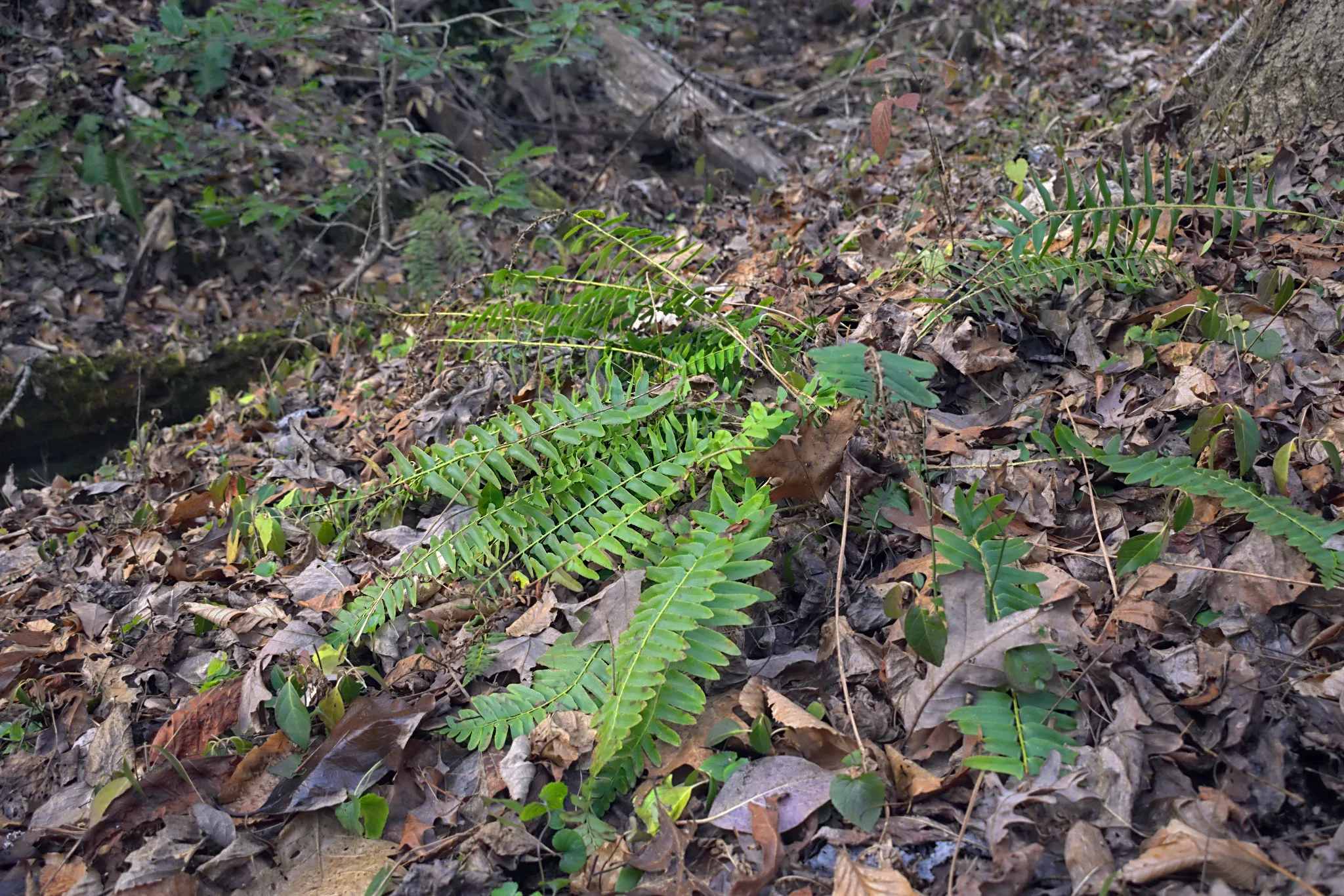
A broad landscape can be understood quickly. Even when the place is unfamiliar, the picture gives us a recognizable way into it.
An intimate landscape works differently. There really isn't a horizon, no dominant subject, and no sense of scale. At first glance, the photograph may seem modest. Its structure only becomes clear once you begin to examine it.
That doesn't mean every intimate landscape rewards slow examination. But when the frame holds several related forms without reducing them to a single point of interest, it can encourage a slower kind of looking.
What makes the viewing experience slower?
Scale is part of it. In an expansive landscape, familiar cues help us organize what we see. In a closer view, those cues may disappear. We might recognize individual intimate details but remain uncertain about the size or depth of the space. The photograph asks us to examine relationships before we can settle into a clear reading of the scene.
A group of similar leaves may appear uniform at first glance, but differences emerge with the longer we look: one turns away from the light, another carries a torn edge, and another interrupts the rhythm. Repeated forms establish some sort of order while small variations interrupt that order.
The same is true of texture. Texture is sometimes treated as surface decoration, but in an intimate landscape it can help describe both space and time. A smooth stone beside a broken stone could mean different histories of exposure. Dampness deepens the color of one area but a dry area looks more muted. Interwoven branches create depth without relying on a distant background.
None of these details needs to shout at you. Their effect often depends on the remaining parts of the whole.
Looking without a single destination
Many photographs direct attention toward one primary subject. We find it, we understand its importance, and read the rest of the photo in relation to it. That structure can be effective, but it is not the only way a photograph can hold our attention.
An intimate landscape usually has visual interest across the frame. The eye does not arrive at one destination. It circles, compares, returns, and notices.
Instead of asking only, “What is this a photograph of?” we may begin to ask how the elements relate. How do the tones shift across the photograph? Does the scene seem stable?
The photographer’s part
Slower viewing is not created by complexity alone. A crowded frame can feel confusing rather than absorbing. The photographer still has to decide what belongs inside the frame.
One way of deciding what belongs is paying attention to relationships rather than objects. A single fern, stone, or reflection may be interesting, but the photograph could gain depth when its surroundings contribute something supporting. The subject is not merely the fern. It could be the spacing between its fronds, the contrast between its surface and the rock beneath it, or the way its curve blends with another form near it.
Restraint does matters here. Strong color, dramatic light, and pronounced contrast can all work in an intimate landscape, but they can also resolve the image too quickly. Sometimes softer light and a narrower range of color leave more room for gradual recognition and interpretation.
The viewer completes the process
No photograph can force someone to look slowly. An image seen briefly on a phone competes with the impulse to move to the next one. The same image, printed at scale, may show a more complex arrangement.
Format is not the whole explanation. Some photographs become exhausted after a longer look. Others continue to change because their parts cannot be absorbed all at once.
Intimate landscapes are well suited to this kind of experience because they often deal in degrees rather than declarations. Subject planes, rather the singular subjects.
So, do intimate landscapes invite slow looking? I would say they do. Not simply because they are quiet or closely framed, but because they invite looking slowly by giving the attention somewhere to go. They give natural patterns variation, surfaces that describe more than just surfaces, and compositions that remain coherent without being settled.
They do not demand that we stop, they just make stopping worthwhile.
Click here for the specific print details of the art shown in this writing.
